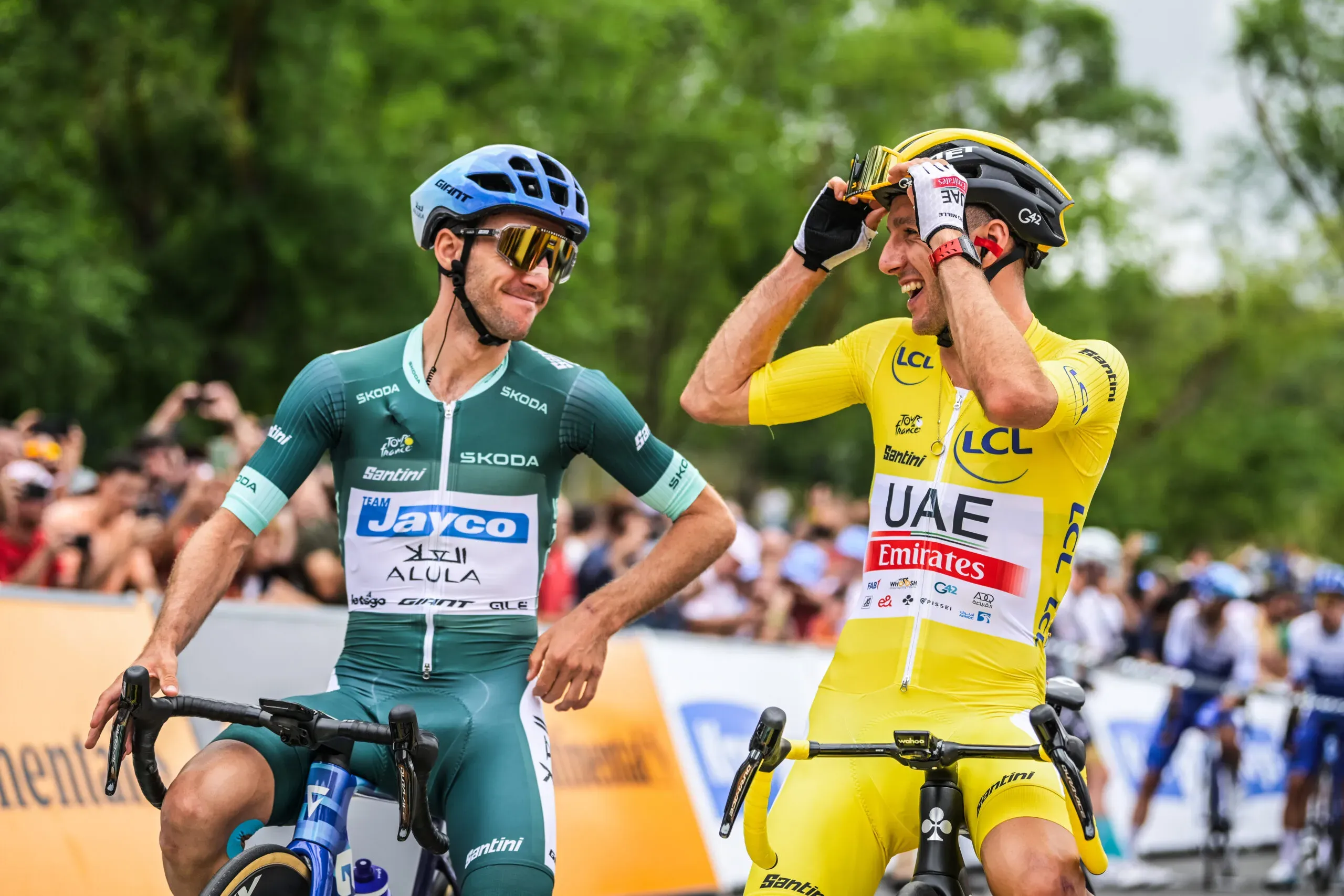
UAE Team Emirates-XRG is in Abu Dhabi this week for sponsor events, The Athletic reported on 26 October, while rival WorldTour squads hold their first 2027 camps. The competition around the team has shifted from equipment to biology. The product everyone wants is a digital twin: a live virtual copy of a rider, built from real measurements, that predicts what the body will do next.
IBM defines this kind of twin as a replica that stays connected to its real-world counterpart through two-way data. In cycling, the counterpart is the athlete. The software takes a blood spot, a power file and a night of sleep and turns them into one decision: go hard, or rest.
What the tools measure
Scott Drawer, performance director at Netcompany Ineos, told Cyclist the goal is continuous markers from blood, the immune system and metabolism. He is direct about the state of play: riders are still tested quarterly, roughly every eight weeks, and those draws are snapshots. Continuous glucose monitors already ride on the bike. The full picture is not there yet, but the technology is emerging.
Several products already occupy pieces of the space. Netcompany's Pulse platform pulls scattered feeds into a single race-day screen; the same company runs airport systems at Heathrow, Munich and Copenhagen, and Drawer expects the cycling work to show next season. Orreco, founded by Dr Brian Moore, reads blood biomarkers, GPS load, sleep and wearables. Made of Genes, working with Barcelona's women's football team and the University of Bonn, flagged more than 70 percent of non-contact injuries ahead of time across four seasons and 34 players; the club counted 22.7 percent fewer injuries and about 20 extra available days per player.
The proof already exists in Pogačar's blood
The public case for a biological twin sits with the Abu Dhabi team itself. Iñigo San Millán, then head of performance at UAE Team Emirates and now at Athletic Bilbao, measured hundreds of thousands of metabolites in Tadej Pogačar's blood. He described a metabolic signature defined by fast recovery: between stages, and between surges on a climb.
That is the raw material a twin needs. Moore's question is a race-day one. If a rider does a set effort on stage 14, what does the next morning look like? Answer that continuously, and teams pick tactics from the model rather than from the power file alone.
Recruiting from public data
There is also a cheaper version of the idea. A Swansea University project with Ineos uses one PhD student and public ride and results data. Drawer calls it a lite digital twin, a tool for finding outliers in the talent pool before anyone signs them. WorldTour squads already lean on AI companies for insights from power numbers, core temperature, ventilation and kilojoules burned, so the step from dashboards to a full body model is shorter than it looks.
Why Abu Dhabi is the centre of this story
The split this week is plain. On one side, the sport: UAE Team Emirates and a leader whose blood data is already published. On the other, the product: software from Netcompany, Orreco, Made of Genes and the Swansea project that turns recovery into a forecast. When the twin arrives, the call between intervals and an easy spin, or between a hard stage and 48 hours of sleep and food, stops being a guess made from quarterly snapshots and becomes a live output on one screen.